How Rosemary Branches and Leaves Illustrations Are Shaping Modern Visual Design
There is a quiet shift happening in digital design, one that brings the organic and the artificial into closer harmony than ever before. At the center of this movement, you will find something as humble and timeless as Rosemary Branches and Leaves. What was once confined to herb gardens and kitchen windowsills now appears across branding campaigns, wellness apps, editorial layouts, and product packaging. The appeal is not accidental. It speaks to a deeper craving for natural imagery in an increasingly screen-dominated world, and it tells a story about how creative professionals are rethinking their visual libraries.
Understanding why botanical elements like rosemary have gained such traction requires looking beyond surface-level aesthetics. Designers, marketers, and entrepreneurs are no longer simply decorating. They are making intentional choices about the symbols and textures they bring into their work. Rosemary, with its associations of memory, fidelity, and vitality, carries a semantic weight that few other herbs can match. When rendered as a high-quality vector illustration, it becomes more than decoration—it becomes a communication tool.
The Return of Botanical Authenticity in a Digital Landscape
For years, digital design leaned heavily toward the geometric and the abstract. Clean lines, flat colors, and minimalist compositions dominated everything from app interfaces to corporate identities. While that approach brought welcome clarity, it also created a certain visual sameness. Audiences began to long for something with more texture, more life, and more connection to the physical world. This is precisely where Rosemary Branches and Leaves found its foothold.
Botanical illustrations offer a kind of authenticity that purely abstract forms cannot replicate. A sprig of rosemary, with its needle-like leaves and gently curving stem, introduces asymmetry and organic flow into a composition. It breaks the rigidity of grid-based layouts without sacrificing professionalism. For brands in the wellness, culinary, and lifestyle sectors, this is invaluable. A rosemary illustration can signal natural purity, artisanal quality, or a connection to Mediterranean traditions—all without saying a word.
Designers are increasingly turning to curated illustration sets that offer both precision and flexibility. Rather than sourcing inconsistent images from disparate places, they look for collections that are thoughtfully organized and ready to adapt. A well-structured AI EPS file changes everything. Layers are named logically, elements are grouped intelligently, and every leaf can be isolated, recolored, or resized in seconds. This is not a luxury; it is a necessity for professionals working under tight deadlines.
Why Rosemary Specifically Resonates with Today's Creators
Rosemary occupies a unique place in both cultural history and contemporary consciousness. It has been used for centuries as a symbol of remembrance, appearing in weddings, funerals, and folk medicine traditions across multiple continents. Today, it is equally at home in a gourmet recipe blog, a natural skincare label, or a mindfulness app. This versatility makes Rosemary Branches and Leaves a remarkably adaptable design asset.
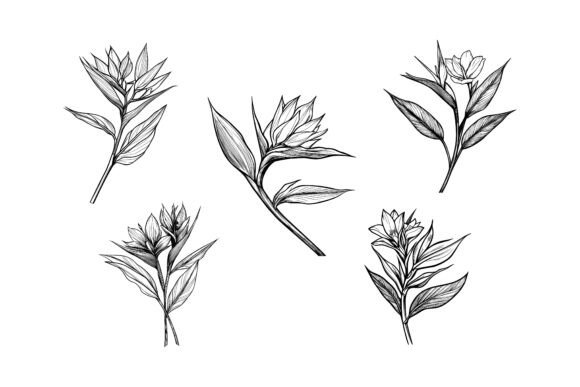
From a purely visual standpoint, rosemary offers distinct advantages. Its elongated, slightly curved leaves create elegant lines that guide the eye naturally through a composition. The subtle variations in leaf spacing and stem thickness provide enough irregularity to feel hand-drawn, even when rendered in crisp vector format. When paired with complementary botanical elements, rosemary can anchor an entire visual theme. When used alone, it stands confidently as a focal point.
Industry watchers have noted a broader pattern here. As consumers grow more discerning about the products they buy and the content they consume, brands must work harder to convey authenticity and care. Stock photography, once the default solution, often feels staged and impersonal. Illustrations, particularly those with botanical subjects, offer a warmer and more distinctive alternative. A rosemary illustration can feel bespoke, even when it comes from a commercially available collection. The key lies in the quality of the source file and the skill with which it is customized.
Seamless Integration Across Platforms and Formats
One of the defining characteristics of modern design workflow is the need for assets to perform across wildly different contexts. A single rosemary illustration might need to appear on a website hero banner, a printed product label, an infographic, and a mobile app icon. Each of these applications demands different dimensions, color profiles, and levels of detail. This is where the technical foundation of an illustration set becomes critically important.
When a file arrives in AI EPS format along with a high-resolution JPG preview, it immediately removes friction from the creative process. The EPS format ensures compatibility with both Mac and Windows environments, eliminating the platform-related headaches that can derail a project. Rosemary Branches and Leaves illustrations built on a solid vector foundation can scale from a tiny app icon to a large-format print piece without losing an ounce of clarity. Every leaf edge remains crisp, every stem curve stays smooth.
Beyond scalability, the internal organization of the file matters more than most casual users realize. A neatly structured layer system allows designers to toggle individual elements on and off, to isolate a single rosemary sprig or combine multiple branches into a wreath or border pattern. This modularity transforms a static illustration into a building block for countless creative possibilities. Changes that would otherwise take hours—recoloring, repositioning, simplifying—can happen in minutes.
The Practical Value of Editability and Creative Control
Ownership and editability have become central themes in the conversation around design resources. More professionals are moving away from platforms that restrict how purchased assets can be modified. They want illustrations they can shape to their exact needs, not ones that arrive locked and final. Rosemary Branches and Leaves delivered as editable vectors put creative control squarely in the hands of the user.
Consider a small business owner building a brand identity for an organic herb farm. They might start with a rosemary illustration but quickly realize they need to adjust the green tones to match their specific packaging palette. Perhaps they want to thin out the foliage for a more delicate look, or combine rosemary with other herbs to create a custom blend icon. With a fully editable AI EPS file, these adjustments are straightforward. Without editability, the designer is stuck, forced to either compromise or start from scratch.
This level of control also supports consistency, which is one of the most underappreciated assets a brand can cultivate. When you can modify a single illustration to appear across dozens of touchpoints—social media graphics, email headers, print brochures, product tags—you build a cohesive visual language. Customers begin to recognize and trust that language. A rosemary sprig, repeated and adapted thoughtfully, can become as distinctive as a logo.
Connecting Rosemary Illustrations to Larger Design Trends
The popularity of botanical vector sets does not exist in isolation. It is part of several converging movements. The first is the growing emphasis on biophilic design, which seeks to incorporate elements of the natural world into built and digital environments. Even subtle touches—a leaf motif here, an organic pattern there—have been shown to reduce stress and increase engagement. Rosemary Branches and Leaves fit naturally into this philosophy, bringing a whisper of the outdoors into websites, apps, and printed materials.
Another relevant trend is the rise of craft and artisanal branding. Small-batch producers, independent cafes, boutique skincare lines, and handmade goods sellers all need visual identities that communicate care and uniqueness. Rosemary, with its culinary and medicinal heritage, aligns beautifully with these narratives. A thoughtfully placed illustration can suggest that a product is made with the same attention to detail that goes into tending an herb garden.
There is also a practical dimension tied to the evolution of design tools and marketplaces. Platforms that sell digital assets have matured considerably. Buyers now expect more than a pretty picture. They want well-documented files, cross-platform compatibility, and the ability to customize without fighting the source material. Collections that deliver on these expectations—that are neatly organized, file, and layer structure and show perfection in details and consistency—stand out in a crowded marketplace. Professionals who have been burned by poorly structured downloads learn to value these qualities deeply.
From Infographics to App Icons: Real-World Applications
To understand the true utility of rosemary illustrations, it helps to walk through a few concrete scenarios. Imagine a nutritionist creating an infographic about brain-boosting foods. Rosemary, widely known for its potential cognitive benefits, deserves a prominent place in the visual hierarchy. A clean, precise vector illustration can be integrated into the infographic layout, scaled to fit a designated section, and colored to harmonize with the overall palette. Because the illustration is editable, the nutritionist can adjust the leaves to a shade that complements the data visualization elements beside it.
Now think about a developer designing a herb identification app. The interface requires small, clear icons that remain legible at reduced sizes. Rosemary, with its distinctive leaf shape, makes for an excellent candidate. The same EPS file that works for a large-format print project can be simplified and optimized for a 48-by-48-pixel icon slot. The stems might be thickened slightly, and extraneous detail removed, but the fundamental identity of the plant remains intact. This adaptability across scale and context is one of the defining advantages of vector-based illustration sets.
For print designers, the demands are different but no less exacting. A rosemary illustration destined for a product label must maintain its integrity when printed on textured paper, foil-stamped onto a box, or screen-printed onto a fabric tote. High-resolution source files with clean paths and proper color separations make these production processes smoother. The ability to easily edit it, change colors and modify the icon so easily according to your needs means that one purchase can serve multiple product lines, seasonal variations, or limited-edition releases.
Why Professionals Are Moving Toward Curated Illustration Collections
The days of cobbling together visuals from scattered free sources are fading for serious creators. The hidden costs—inconsistent quality, licensing worries, time spent searching and adapting—add up quickly. Curated collections solve these problems by providing a unified aesthetic, reliable technical standards, and clear usage rights. When a set includes AI EPS and JPG formats and is designed for Mac and Windows users, it signals that the creator understands the diverse environments in which professionals actually work.
There is also a deeper satisfaction that comes from working with well-crafted assets. Designers often speak of the "flow state," a mode of deep focus where creativity moves unimpeded. Poorly constructed files interrupt that flow. Jagged paths, unlabeled layers, and inconsistent scaling throw up barriers that break concentration. Conversely, files built with precision and care—where every node is placed intentionally and every group is named logically—support the creative process rather than hindering it. For Rosemary Branches and Leaves, this attention to structure transforms a simple illustration into a genuine professional tool.
Looking Ahead Without Losing Roots
As artificial intelligence and automated design tools continue to evolve, the role of human-crafted illustration might seem uncertain. Yet there is growing evidence that audiences value the intentionality behind carefully composed vector art. An illustrator who painstakingly renders every rosemary leaf, who considers the curve of each stem and the balance of the overall composition, produces work that carries a subtle but perceptible humanity. That quality does not disappear when the file is digitized and distributed. It remains embedded in the paths and layers, ready to surface in whatever project the end user undertakes.
For the entrepreneur launching a natural product line, the marketer building a wellness campaign, or the freelancer designing a client's brand identity, Rosemary Branches and Leaves offer more than convenience. They offer a connection to a tradition of botanical illustration that stretches back centuries, updated and optimized for contemporary workflows. The herb itself has traveled from ancient gardens to modern screens with remarkable grace. In the hands of a skilled designer, equipped with a properly structured vector file, it can continue that journey for years to come.
The illustration set that includes AI EPS and JPG, works across platforms, features a neatly organized, file, and layer structure, and delivers perfection in details and consistency is not just another digital commodity. It is a foundation. It supports print projects and web designs, symbols and infographics, apps and branding exercises. It bends to the will of the user without breaking. For those who have spent enough time wrestling with subpar assets, the difference is immediately recognizable. The question is no longer whether such resources are worth the investment, but rather how soon the next project will benefit from them.
Hello welcome to our special AI EPS collections. What makes these AI EPS illustration sets special for you is the combination of artistic integrity and practical engineering. The rosemary branches and leaves are drawn with an eye for natural beauty and built with a structure that respects the realities of professional design work. They are suitable for print, web, symbols, apps, infographics and any other medium that demands clarity and impact. They are ready to be edited, recolored, and modified according to the unique demands of your project. The only remaining step is to begin.