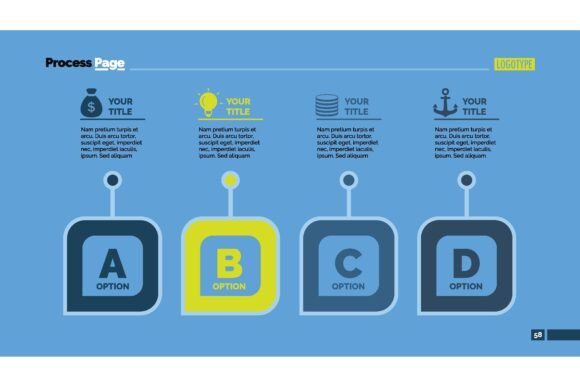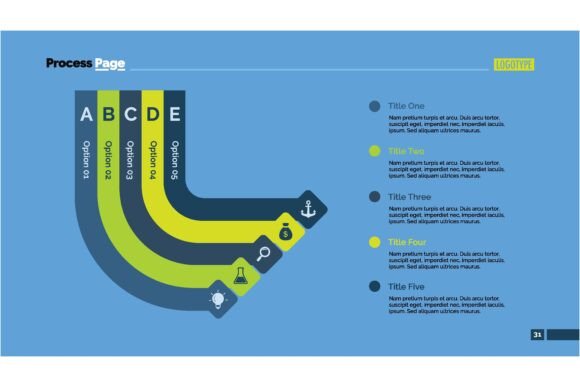
Arrow Diagram Slide Template with Option: A Visual Storytelling Essential
Modern presentations demand more than a sequence of bullet points. Audiences have grown tired of cluttered slides and wandering narratives. The Arrow Diagram Slide Template answers this need by turning abstract plans into crisp, directional visuals. It is more than a decorative element—it works as a structural backbone for your message, helping viewers see progression, sequence, and impact at a glance. With a flexible “option” design, it adapts to scenarios ranging from strategic decision trees to step-by-step method breakdowns, making it an invaluable asset for anyone who communicates complex ideas.
What Makes an Arrow Diagram Slide Template So Effective
At its core, an arrow diagram slide does what text alone cannot: it physically maps out flow. Arrows carry inherent meaning—forward motion, cause and effect, growth, transition. When you place a concept along a series of connected arrows, you invite the mind to follow a clear path. The “option” component adds a crucial layer of decision-making. It might present diverging paths, alternative outcomes, or a space to highlight a recommended route. This dual readability—sequence plus choice—turns a standard slide into a mini framework for thinking.
A well-designed template comprises clean connectors, spacious nodes for text or icons, and a color logic that distinguishes primary from secondary lanes. Because the structure is predefined, users spend less energy on building graphics and more on refining the substance. That simplicity aligns perfectly with the modern push toward lean, impactful presentations.
Why Visual Storytelling Has Become a Non-Negotiable Skill
Information density has soared over the past decade. In boardrooms, virtual meetings, and learning platforms, people scroll through dozens of slides each day. Their attention is a scarce resource. Visual storytelling—the craft of using images, shapes, and layout to guide a narrative—has moved from a nice-to-have to a core competency. Research in cognitive psychology consistently shows that visuals accelerate comprehension and improve recall. When you replace a dense paragraph explaining a four-phase rollout with an arrow diagram, you shorten the time to understanding and reduce cognitive load.
This shift is not just about aesthetics; it reflects deeper changes in how we work. Remote and hybrid teams rely on shared visuals to align across time zones. Asynchronous communication thrives when a single slide can carry the weight of a 15-minute explanation. The arrow diagram slide template thrives in this environment because it is language-light and logic-heavy, transcending jargon and hierarchy.
A Holistic Medium That Blends Infographic and Diagram
One of the template’s greatest strengths is its hybrid nature. It borrows the visual appeal of an infographic—using icons, subtle gradients, and proportion-led design—and marries it with the strict logic of a flowchart or process diagram. This blend means you can present a timeline, a comparative analysis, or a phased strategy without ever leaving the same visual vernacular. For instance, a marketing team might use a single arrow diagram to outline a campaign funnel: the main arrow represents the customer journey, while branching options highlight test variations or A/B split points. The result is a slide that works as both summary and guide.
Because it operates as a holistic medium, the template suits a vast range of topics. Business leaders use it to model strategic priorities; educators map historical cause-and-effect chains; freelancers pitch multi-stage project plans. The arrow isn’t just a shape—it becomes the story’s pulse, moving from problem to solution, idea to execution.
Simplifying Complex Strategies into Clear Directions
Strategies often feel intangible. They involve interdependencies, feedback loops, and layered assumptions. The template cuts through that fog by enforcing a before-now-after logic. Consider a start-up preparing an investor update: revenue growth depends on product launches, which hinge on R&D milestones. An arrow diagram with optional branches can display the primary timeline alongside “if-then” scenarios—if launch A delays, option B activates. This level of clarity prevents misinterpretation and keeps discussion grounded.
The option element adds particular nuance. Not every plan is linear. When you highlight multiple possible next steps—each with a short label, a distinct color, and a connecting arrow—you acknowledge uncertainty without weakening the message. Audiences appreciate that honesty. They see a presenter who has thought through contingencies, not just a single-track promise.
Current Trends Driving the Adoption of Diagram-Centric Slides
A few intersecting trends explain why arrow diagram templates are gaining popularity:
- Minimalist presentation design: The era of decorated slides is fading. Clean layouts with generous white space put the focus on relationships, and arrows naturally inhabit that space.
- Data storytelling: Organizations now expect data to be woven into narrative arcs. An arrow diagram can carry supporting numbers in small callouts, linking metrics directly to steps.
- Agile and iterative workflows: Sprints, pivots, and continuous improvement cycles demand visual loops. Arrow diagrams can be easily repurposed to show circular or branching iteration.
- Mobile consumption: Many presentation viewers now open decks on phones. An arrow diagram scales well: the linear scanning pattern on a small screen mimics the arrow’s natural eye guide.
These trends are not fleeting. They reflect a maturing approach to professional communication, where clarity is the ultimate sophistication.
Practical Applications Across Roles and Industries
The versatility of this template means it shows up in nearly every field. Here are a few grounded examples that reflect daily realities:
- Product Managers: Use arrow diagrams to illustrate user flow, feature rollout sequences, or decision trees for trade-off discussions. A slide with a central arrow and two diverging options can map a “build vs. buy” analysis in seconds.
- Learning Designers: Structure course outlines or learning pathways. Each module becomes a node on the arrow, with optional branches for remedial steps or advanced tracks, helping learners self-select their path.
- Sales Consultants: Craft compelling proposals by laying out a customer’s current state, the implementing steps, and the future outcome—with optional package upgrades clearly shown as branches.
- Healthcare Administrators: Communicate patient journey improvements or process updates. A template can show the standard treatment pathway, with subordinate arrows marking decision points for specialist referrals.
- Freelance Strategists: Package deliverables into a phased approach, using the option arrow to offer “core,” “growth,” and “full-service” scopes, making pricing conversations transparent.
In each case, the template does not replace the presenter’s expertise—it amplifies it. The graphic becomes a silent partner, holding the structure so the speaker can add nuance.
How Arrow Diagram Templates Build Audience Trust
Trust in presentations is fragile. When slides feel manipulative or overly vague, audiences disengage. An arrow diagram with clear options builds credibility because it lays out reasoning visibly. There is no hidden agenda: the audience sees the progression and can verify that conclusions follow from premises. This is especially valuable in analytical or strategic contexts, where stakeholders need to trace logic before approving investments.
Moreover, a well-crafted diagram signals professionalism. It shows that the presenter respects the audience’s time by distilling complexity. That respect translates into heightened attention and better recall. After a meeting, people may forget bullet points but they will remember the shape of a compelling arrow path.
Designing for Flexibility Without Overcomplication
The best arrow diagram slide templates offer structure without rigidity. They typically include several pre-built layouts: a simple left-to-right progression, a vertical stack for hierarchical steps, a central hub with radiating options, or a swelling arrow that enlarges key phases. The “option” variant might highlight a single recommended route in a bolder color while keeping alternatives muted but visible. This flexibility means you are not forcing a narrative to fit a shape; you can select the configuration that best mirrors your logic.
When customizing, it is wise to maintain visual restraint. Add only the icons and labels necessary to clarify the step. Avoid trapping every detail inside the diagram; some nuance belongs in speaker notes or supplementary handouts. A clean arrow diagram will often use no more than five to seven words per node, ensuring the slide remains glanceable.
Avoiding Common Pitfalls with Arrow Diagram Slides
Even a powerful tool can be misused. One frequent mistake is cramming too many branches. When an arrow diagram sprouts more than three or four distinct options, the clarity advantage collapses. For scenarios requiring many alternatives, consider breaking the single slide into a sequence, with each subsequent slide diving into a subset of choices. Another pitfall is inconsistent arrow meaning: if one arrow means “step,” another means “cause,” and a third means “increase,” the audience loses the mental model. Establish a legend or simply let the arrow consistently represent advancement, while using color or label differences to signal role shifts.
Finally, avoid the trap of excessive animation. While a subtle reveal can help guide attention, overly elaborate arrow builds distract. The focus should remain on the idea, not the transition.
The Evolution from Static Decks to Interactive Visual Tools
Presentation software has evolved enormously. Today, templates can embed minor interactivity, and even a static PDF can be designed to mimic a decision flowchart. The arrow diagram slide template aligns with this evolution by being easy to repurpose for interactive PDFs, clickable dashboards, or workshop canvases. Teams increasingly use the same template in slide decks and then print it as a poster for brainstorming sessions. This dual-use extends the template’s value far beyond a single presentation slot.
As remote collaboration tools improve, presenters can share their screen and annotate an arrow diagram in real time, circling the option that gains consensus. The template becomes a living document, not a finished artifact. This shift mirrors a broader workplace trend: communication is continuous, and static slides are giving way to dynamic visual aids that evolve with the conversation.
How to Choose the Right Arrow Diagram Slide Template for Your Needs
Not all templates are equal. Look for designs that offer:
- Clear differentiation between main path and optional branches. This is essential for the “option” feature to work without confusion.
- High contrast and accessibility. Test the template in grayscale to ensure that color dependencies don’t obscure meaning for color-blind viewers or printouts.
- Easy editability. A well-built template allows you to change arrow thickness, node shapes, and text without breaking alignment.
- A balanced mix of text placeholders and icon support. Some ideas need a small icon to trigger recognition; others need a short phrase.
When you find a template that meets these criteria, invest time in making it your own. Adjust the palette to your brand, insert your signature icons, and perhaps create a few go-to layouts. Over time, that template becomes a recognizable part of your visual identity.
Guiding Your Audience on an Enlightening Journey
At its heart, a presentation is a guided tour. The presenter acts as a navigator, and the slides mark the route. An arrow diagram slide with option thinking turns each step into a memorable waypoint. It transforms a monologue into a shared exploration where everyone sees the direction of travel. This psychological shift—from passive listening to active following—is subtle but profound. People lean in when they can anticipate the next logical leap.
Whether you are walking a client through a multi-phase engagement or teaching a concept that builds upon itself layer by layer, the arrow’s forward thrust creates momentum. And when you pause at an option junction, you invite participation. That moment of “Here’s where we can go left or right—based on your priorities” turns a template into a conversation starter. That’s the real power embedded in this seemingly simple graphic.
Integrating the Arrow Diagram Into Your Workflow Today
Adopting arrow diagram slides doesn’t require a design overhaul. Start by identifying one or two recurring presentation patterns in your work—such as quarterly planning updates, project kickoffs, or training modules—and build a starter set of arrow diagrams for those. Test them with colleagues; notice where confusion arises and refine. Over a handful of iterations, you’ll internalize the grammar of arrows and options, and the quality of your visual storytelling will rise sharply.
Many professionals find that once they start using arrow diagrams, they naturally begin to think more structurally about their ideas. The visual tool reshapes mental models, nudging you toward sequence, causation, and contingency thinking even before you open a blank slide. That internal discipline often turns out to be the most valuable outcome of all.
Embracing the Template as Part of a Larger Presentation Philosophy
The arrow diagram slide template is not a standalone miracle; it works best as part of a deliberate approach to communication. Combine it with a clear narrative arc, a presenter who values brevity, and a genuine understanding of the audience’s needs. Used in that context, the template becomes what it promises: a vital tool for visual storytelling, adept at turning messy reality into lucid, actionable direction.
From business strategy to analysis, from planning to reporting, this versatile graphic earns its place in your presentation arsenal. It isn’t about impressing with complexity—it’s about respecting your audience enough to make complexity feel simple. And in a world where every second of attention is earned, that respect makes all the difference.