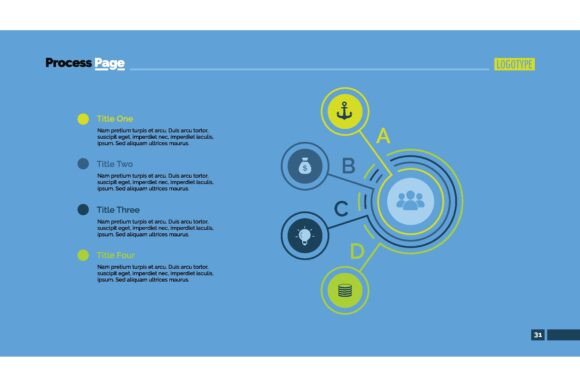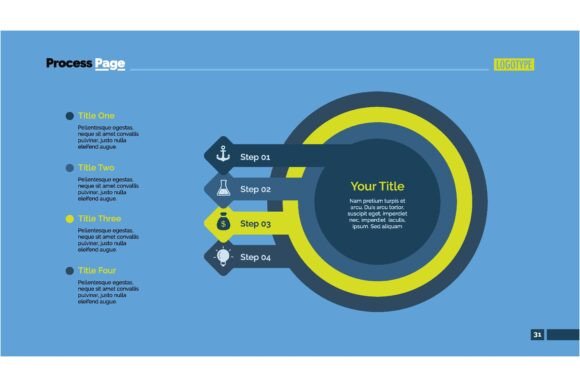
Business Step Diagram Slide Template: Your Shortcut to Clearer, More Persuasive Presentations
You’ve crunched the numbers, outlined the strategy, and you know your plan is solid. But when you drop a wall of bullet points into a slide deck, you watch the room’s energy fade. That’s exactly where the Business Step Diagram Slide Template changes the equation. It’s not just a static graphic—it’s a flexible visual framework that turns linear processes, phased rollouts, or layered workflows into something people instantly grasp. Whether you’re mapping a customer journey, breaking down quarterly goals, or explaining a change management sequence, this single resource can function as a chart, an infographic, a diagram, and a guide, all within one clean layout.
Many professionals overlook the power of a well-structured step diagram because they assume all templates deliver the same result. The reality is messier. Choosing the wrong tool—or using the right one incorrectly—can confuse your audience, dilute your message, and even make you look less prepared than you actually are. This article digs into the common missteps people make when selecting, customizing, and presenting with a slide template like this, and how to get it right so your ideas land with impact.
Why a Purpose-Built Step Diagram Outshines Generic Slide Elements
A typical presentation file gives you shapes and lines. You drag, align, and hope it doesn’t break when you copy it to the next slide. A dedicated Business Step Diagram Slide Template saves you from that friction. It pre-structures the visual logic: arrows flow naturally, spacing is consistent, and the color coding already guides the eye through a sequence. This matters more than you think. When you assemble a diagram from scratch, small misalignments add subconscious tension that distracts from your point. Worse, you might lose hours perfecting something that could have taken ten minutes.
But not every template labeled “step diagram” is built for real business use. Some are purely decorative, with confusing iconography or fonts that shift when opened in different software. Others are so rigid that adding a sixth step breaks the entire layout. Before you download or purchase, you want to confirm two things: the file is compatible with your presentation software without losing formatting, and the placeholder text reveals a logical reading order (left to right, top to bottom, clockwise) that matches how you’ll use it. Ignoring this often leads to slides where the sequence feels disjointed, forcing you to explain what the visual should already be communicating.
Overcomplication: The Fastest Way to Lose Your Audience
One of the most frequent errors people commit is overcrowding a step diagram. You have a complex initiative with eight phases, twelve substeps, and a few decision branches. It’s tempting to fit it all into a single slide because you want to show “the full picture.” The result is tiny text, arrows crossing each other, and so many boxes that nobody knows where to look first. That’s not a diagram—it’s a visual headache.
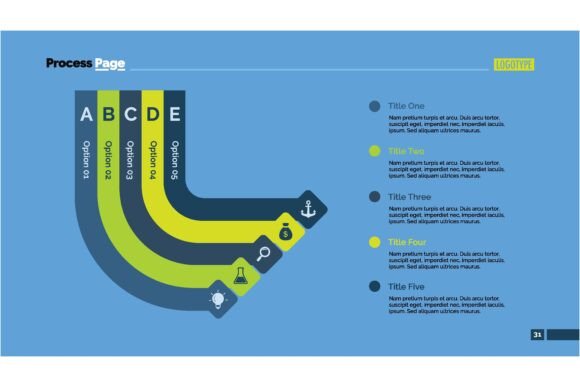
A Business Step Diagram Slide Template works best when you respect its intended capacity. Most templates in this category are optimized for three to seven key stages. If you push beyond that, you violate the design’s natural pacing. The fix isn’t to shrink the font. Break your story across multiple slides, using the same template style to create a progressive reveal. Show the big-picture five-step flow on one slide, then dedicate follow-up slides to each phase with a magnified, simplified version of that specific step. This keeps the audience tracking with you instead of wondering why they can’t read the tiny labels.
Another overlooked detail is the use of supportive text. A step label like “Assess Market Readiness” is helpful, but only if the viewer understands what that entails within your context. A good practice is to add a one-line description under each step title, and then, in your speaker notes or handout, offer the deeper explanation. The slide itself stays clean. Many presenters dump full paragraphs onto the diagram, turning it into a document rather than a presentation aid. Remember, the template is there to anchor conversation, not replace it.
Ignoring Brand Language and Visual Consistency
Downloading a sleek, pre-colored template can make you feel like your slides are instantly professional. But if the template’s default palette is neon green and electric blue while your company colors are muted earth tones, the disconnect can suggest carelessness. Even free templates often embed accent hues that clash with your logo or previous slides. A small detail, yes, but audiences pick up on these inconsistencies, sometimes without consciously knowing why they feel unsettled.
Before you commit to a Business Step Diagram Slide Template, check how easily you can recolor its elements. Look for vector-based formats (like PowerPoint’s native shapes or editable SVG) where you can click on a shape and fill it with your brand’s hex code. If you have to take a screenshot and recolor in an image editor, you lose sharpness and editability. That’s a red flag. Similarly, pay attention to the font choices embedded in the template. A design that relies on a custom typeface not installed on your system might default to a generic font, breaking the visual rhythm. Test it on the actual machine you’ll use for presenting.
Mistaking Fancy Design for Clear Communication
Some step diagram templates look like art pieces—gradients, drop shadows, 3D bevels, and overlapping transparent shapes. Aesthetics alone can seduce you into picking a design that, while beautiful, actually obstructs quick comprehension. A shadow that’s too heavy might blur text. A curved, winding path can imply a circular process where you intended a linear progression. Visual metaphors matter immensely.
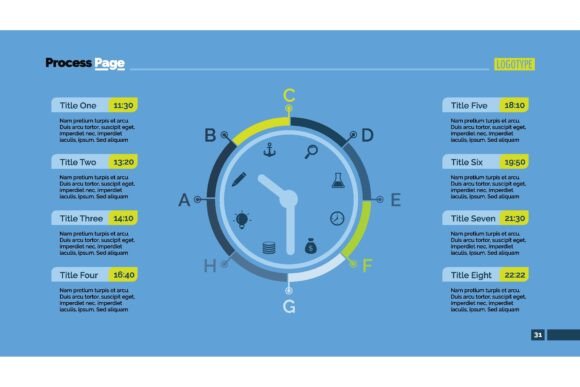
Ask yourself: does the chosen layout reinforce the relationship between steps? If your strategy is a sequential one with no going back, a horizontal arrow-shaped diagram is ideal. If you’re describing a recurring cycle, select a circular template. Many users simply grab the most visually striking option without considering what the shape communicates. Then they spend meeting time verbally correcting the impression the slide already gave. That’s avoidable friction. Take five minutes to browse the template’s variations—often a single slide file contains multiple layout options—and pick the one whose directional flow mirrors your message.
Real-World Slip-Ups and How to Correct Them
Consider a marketing freelancer pitching a three-month social media roadmap to a boutique client. She finds a stunning Business Step Diagram Slide Template with six interlocking cogs. She forces her quarterly plan into that six-cog layout by splitting “Content Creation” into “Graphic Design” and “Copywriting” as separate steps, even though they realistically happen simultaneously. The client gets confused, asking if one must finish before the other starts. The visual created an artificial dependency. A better approach would have been to use a three-phase horizontal funnel with bullet points under each for concurrent activities. The template wasn’t wrong; the application was mismatched.
In another case, a startup founder used a template with numbered circles connected by dotted lines to show a funding roadmap. However, he didn’t update the generic placeholder icons—a cart, a gear, a lightbulb—so the slide showed a shopping cart for “Seed Round” and a gear for “Series A.” Investors chuckled quietly. Taking an extra ten minutes to replace those icons with relevant symbols (like a rocket, a graph, or a handshake) would have signaled preparedness and attention to narrative flow. Most templates include a built-in icon library you can swap with a single click. Don’t skip that step; the default icons are rarely tailor-made for your specific industry.
The Trap of “One and Done” Slides
A step diagram doesn’t have to live on one slide forever. An underused technique is to repurpose the same template architecture throughout your deck. Use the full step diagram as an agenda slide at the start, then place a mini version in the corner of subsequent slides with the current step highlighted. This constant visual reference keeps your audience oriented. When presenters treat a step diagram as a standalone visual that appears once and vanishes, they miss an opportunity to create a cohesive narrative thread.
Before you finalize your presentation, check if the template’s style can be extended. See if it comes with matching section dividers, icon sets, or thumbnail variations. A cohesive slide deck feels intentional and reduces the mental load on your viewers. If you’re mixing three different template families—one for the diagram, one for the data chart, one for the title slide—the result can feel like a patchwork unless you unify colors and elements meticulously. Starting with a well-built template suite often saves more time than you’d expect.
What to Verify Before You Hit Download or Present
It’s not enough to like a preview image. Before you trust a Business Step Diagram Slide Template with your critical message, run through a quick quality check. Open the file in the exact software version you will use live. Does it look identical, or are lines misaligned? Test the text: type your longest step title in place of the placeholder. Does it overflow, or does the layout adjust gracefully? Many templates have fixed-width boxes that can’t accommodate real-world content without breaking.
Look at the license terms. Some free templates forbid commercial use or require attribution, which can be problematic for client-facing or internal corporate decks. If you’re buying a premium template, verify that it includes the slide size you need (standard 4:3 or widescreen 16:9) and that it’s been updated recently. Older templates may still use legacy shapes that look pixelated on high-resolution screens. Also, check if the file includes a light and dark background version; presenting in a dim room with a bright white slide can be harsh, while a dark variant can strain readability in a well-lit conference room.
Finally, watch a colleague run through the slide without your explanation. Ask them what message they take away from the diagram alone. If they misinterpret the flow or miss the intended starting point, you likely need to adjust the visual hierarchy—increase the size of the first step, add a subtle “start here” indicator, or re-sequence the numbering. That quick test can prevent an embarrassing disconnect during the actual meeting.
Practical Ways to Elevate Your Step Diagram Right Now
If you’re currently staring at a slide that feels flat, try layering meaning into the template with small, purposeful tweaks. Replace generic numbers with icons that represent each phase—an eye for observation, a wrench for building, a flag for completion. Use a consistent but subtle animation such as “appear” or “fade” to reveal steps one at a time, guiding your audience’s attention exactly where you want it. Avoid elaborate fly-in or spin effects that make the content look like a novelty rather than a professional tool. The goal is to support your spoken words, not overshadow them.
Also, remember that a step diagram can serve as a printed handout or a standalone infographic exported as a PDF or image. With the right Business Step Diagram Slide Template, you can reuse the same visual across your pitch deck, your summary email, and even a social media post. That consistency builds recognition and reinforces your expertise. Just be sure to adjust the resolution and any text size for the medium—what works on a projected slide might be too small for a smartphone screen.
Steer clear of the assumption that a step diagram is only for corporate process mapping. Educators can use it to outline a lesson flow. Nonprofits can illustrate the stages of a community project. Freelancers can present their onboarding steps for new clients. The versatility of a polished template lies in its adaptability, not in a single predetermined use case. Once you start thinking of each step as a self-contained container for a key idea, you’ll find applications you hadn’t considered.
The next time you need to convey a progression, resist the urge to cobble together shapes from scratch or settle for a misaligned copy from a past presentation. Invest a small amount of care in selecting, customizing, and stress-testing a Business Step Diagram Slide Template that genuinely matches your message. Your audience will thank you with their attention—and more importantly, with their understanding.